Overview
Organization: Texas A&M University San Antonio ITS Department
Position: Technical Writer/Instructional Designer
Audience: Help Desk project staff
Responsibilities: Instructional Design, eLearning Development, Storyboarding, Action Mapping, LMS Administration, Prototyping, Digital Credentials Management, Evaluation
Tools Used: Storyline 360, Rise 360, Adobe Creative Cloud, Accredible, Canva, Microsoft Office, Blackboard LMS, MindMeister, Jira, SharePoint

Features
I supported the City of San Antonio’s digital equity efforts by designing and developing training solutions for the Connected Beyond the Classroom initiative, a $27 million project aimed at closing the digital divide for students in underserved communities. My role focused on preparing Help Desk staff to provide technical support to families using newly deployed wireless internet solutions across low-income neighborhoods.
I created eLearning modules that taught staff how to troubleshoot Cradlepoint IBR900 hardware, navigate the Motorola Nitro dashboard, and operate the NetCloud Manager platform. Separate modules also covered communication and soft skills with scenario-based activities. These modules were delivered through a custom-designed course in Blackboard LMS, which I used to monitor learner progress and assess comprehension.
Process
I applied Cathy Moore’s Action Mapping framework to align learning with real-world performance goals based on interviews with SMEs during and kick-off meetings. I identified clear objectives and mapped out specific on-the-job actions required to meet these goals, such as identifying issues, troubleshooting hardware and software, communicating with customers, and escalating issues when needed. This approach ensured the learning experience was practical and directly tied to the skills required for effective performance.

I used Microsoft PowerPoint to create instructional storyboards for the Connected Beyond the Classroom Initiative, focusing on help desk training scenarios. Each storyboard included realistic dialogue scripts with branching choices based on learner responses, as well as visual mockups of interface prompts and customer information displays. Some were used to prototype scenario-based simulations, allowing staff to practice handling common support situations such as guiding users through router resets or explaining service delays clearly and calmly while reinforcing effective communication skills and problem-solving under pressure.

Using Storyline 360, I transformed static content into engaging, interactive modules that promoted hands-on learning and real-world application. I developed software simulations that allowed learners to practice navigating Cradlepoint interfaces in a safe, guided environment, providing a realistic and risk-free opportunity for skill development. Branching scenarios encouraged learners to make decisions and solve problems in real-world support situations, helping them build confidence and critical thinking. The learning experience was delivered through Blackboard LMS.

As part of the Connected Beyond the Classroom Initiative, I used Adobe InDesign, Canva, and Microsoft PowerPoint to design clear, accessible documents that supported our technical training and community outreach efforts. These materials included step-by-step hardware setup guides and one-page overviews that outlined our team’s mission, services, and impact. I focused on visual clarity and user-friendly layouts to ensure the content was easy to follow for diverse audiences, including families and school district partners. Each design reinforced the initiative’s goal of promoting digital equity by making technical support and information more approachable and effective.
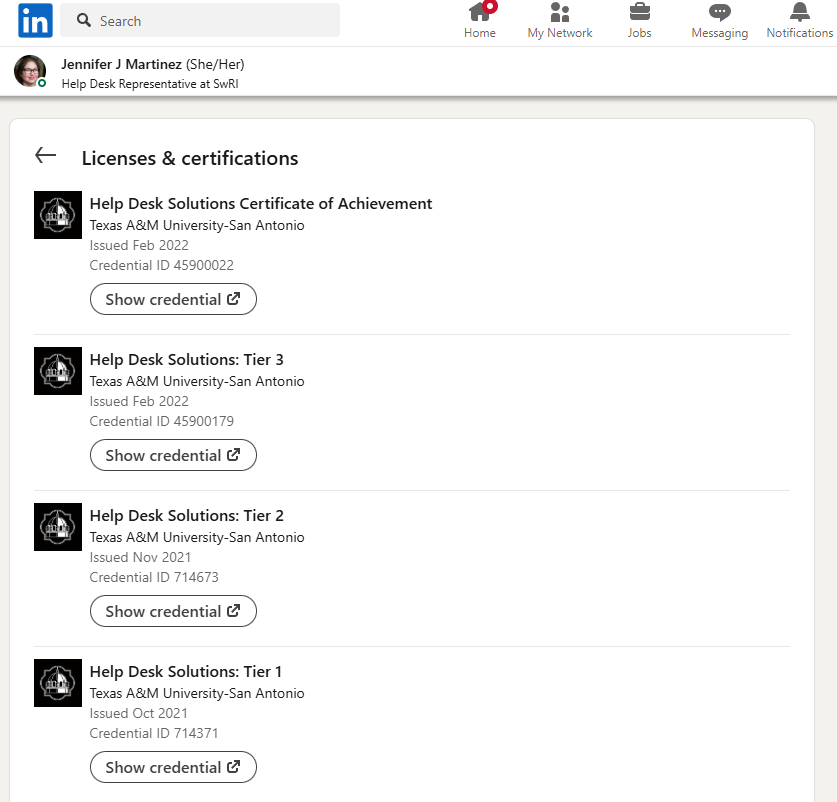
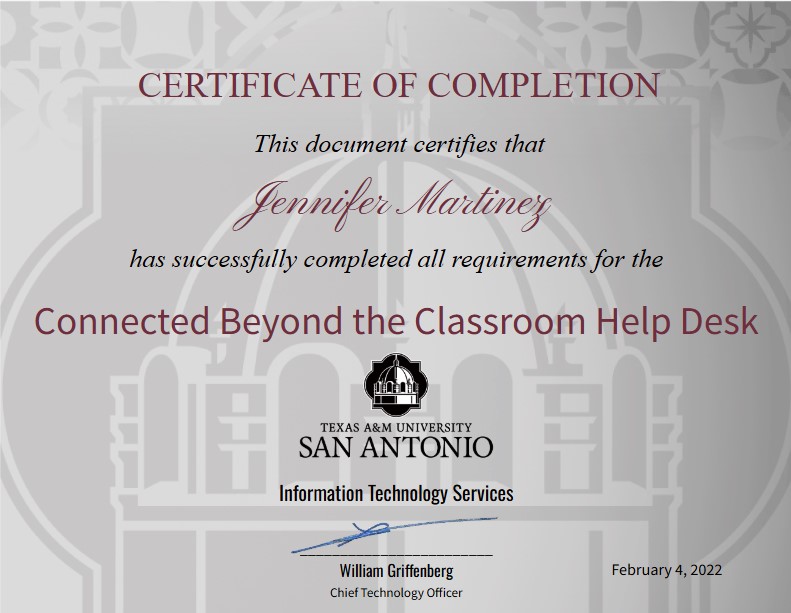
I used the Accredible credentialing platform to design and award digital badges to students who completed key milestones in the Help Desk Solutions course on Blackboard LMS. Each badge represented a specific Tier of the training, such as successfully completing the Cradlepoint module, demonstrating troubleshooting competency, or passing a final assessment.
✅ Results
The Help Desk Solutions training led to a measurable increase in technician confidence and efficiency. Learners reported greater clarity in troubleshooting workflows and felt better prepared to support end users. Course engagement was strong due to the interactive format and phased digital credentials, which helped maintain motivation and encourage milestone completion.
From a development perspective, integrating accessible design and varied practice activities proved essential in reaching a wide range of learners. Automating badge issuance through Accredible saved time and added professional value for learners, while the use of Blackboard LMS allowed for effective progress tracking and assessment.
💡 Takeaways
Interactive design improves retention
Using software simulations, branching scenarios, and knowledge checks helped learners retain information more effectively than static content alone.
Action-based learning supports real-world performance
Focusing on what learners needed to do rather than just what they needed to know resulted in stronger on-the-job application of skills.
Credentialing boosts motivation
Issuing digital badges at key milestones gave learners a sense of progress and achievement that encouraged them to complete the course.